501(c)(3) Raptor Conservation Project · Olympic Peninsula, Washington

Every genetic line
is a lifeline.

Falcons Forever is a Federally licensed and CITES registered breeding project dedicated to securing the genetic future of birds of prey.

Why It Matters

Raptors are the measure of a healthy world

Gyrfalcons are the apex predators of their ecosystem. When populations decline or disappear, the damage runs downward through the food web. Today, threats including climate change, habitat loss, and the unprecedented spread of Highly Pathogenic Avian Influenza make captive genetic reserves more critical than they have ever been.

A captive-bred falconry bird is not a rescued animal waiting to return to the wild. It is a partner with a purpose, an education ambassador whose daily presence in front of people who have never looked a falcon in the eye is doing real conservation work. And beyond that role, every individual bird in a well-managed captive population represents a genetic line that may one day be the only surviving copy of itself. Falconers have always understood this. It is part of why the sport has survived.
🧬

Genetic Insurance

Captive populations that mirror the genetic diversity of wild populations are the last line of defense against catastrophic species loss. We track lineage carefully so every pairing adds value to the global gene pool.

🌍

Global Contribution

Eyasses from our project travel to traditional falconers, pest abatement programs, and other breeding projects worldwide. Each bird placed strengthens the broader captive safety net.

🦠

HPAI Resilience

Highly Pathogenic Avian Influenza has devastated raptor populations across multiple continents. Geographically distributed captive reserves reduce the risk that a single outbreak wipes out an entire genetic line.

Focused on the Gyrfalcon

We focus our breeding program on the gyrfalcon, the world's largest falcon and a bird of the high Arctic. Its dependence on stable tundra prey and specific nesting cliffs makes it uniquely vulnerable to climate change, and the North American captive population is small enough that every successful pairing meaningfully strengthens the global gene pool. Concentrating our resources on a single species lets us go deeper on the husbandry, lineage tracking, and genetic management that this work demands.

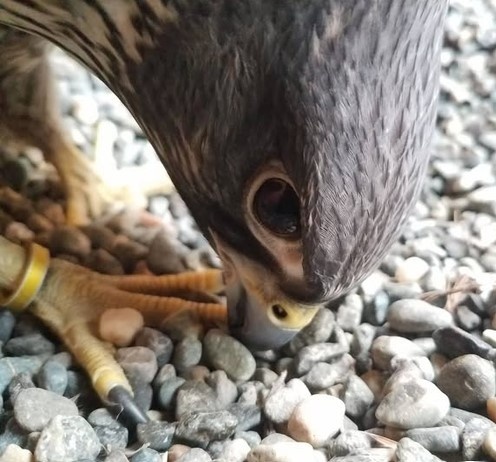
A falcon on the gravel, head lowered, jesses visible on its legs

Petrol, captive bred gyrkin displaying in his scrape

Our Mission

Falcons Forever began as a small breeding project to produce personal falconry partners for a small group of like minded falconers. Over time, the need to continue shepherding the captive gyrfalcon population became apparent. With financial contribution from the founders, Falcons Forever was born and our mission grew to encompass the important work of species wide conservation through maintaining vital genetic integrity within the global captive gyrfalcon population. We operate within the frameworks established by the US Fish and Wildlife Service, as well as stringent guidelines set by the Convention on International Trade in Endangered Species of Wild Fauna and Flora, also known as C.I.T.E.S.

We believe that the falconry community, with its deep knowledge of raptor biology and husbandry accumulated over thousands of years of practice, is uniquely positioned to contribute to the conservation challenges of the 21st century. Falconers were instrumental in the recovery of the peregrine falcon from the brink of extinction. That same expertise, applied with modern rigor, is what Falcons Forever brings to the work. In 2021, UNESCO inscribed falconry on its Representative List of the Intangible Cultural Heritage of Humanity, recognizing it as a living tradition passed down through generations across dozens of countries.

Our Vision

We envision a growing network of cooperative breeding programs whose combined genetic libraries mirror the diversity still present in wild populations, and whose birds are placed into relationships, with falconers, pest abatement operators, education ambassadors, and other breeding programs, that give each animal a meaningful role and a cared-for life.

Captive breeding programs have been used to successfully rehabilitate threatened and endangered raptors by such groups as the Peregrine Fund. Evidence that a small group of dedicated practitioners can change the trajectory of a species encourages us to continue to shepherd a genetically sound domestic population.

Core Principles

What guides the work

The peregrine falcon was removed from the U.S. Endangered Species List in 1999, thirty years after captive breeding programs began working to pull it back from the edge. That recovery did not happen in government offices. It happened in the chambers of dedicated practitioners who understood the birds well enough to breed them, raise them, and return them. The lesson has not changed.
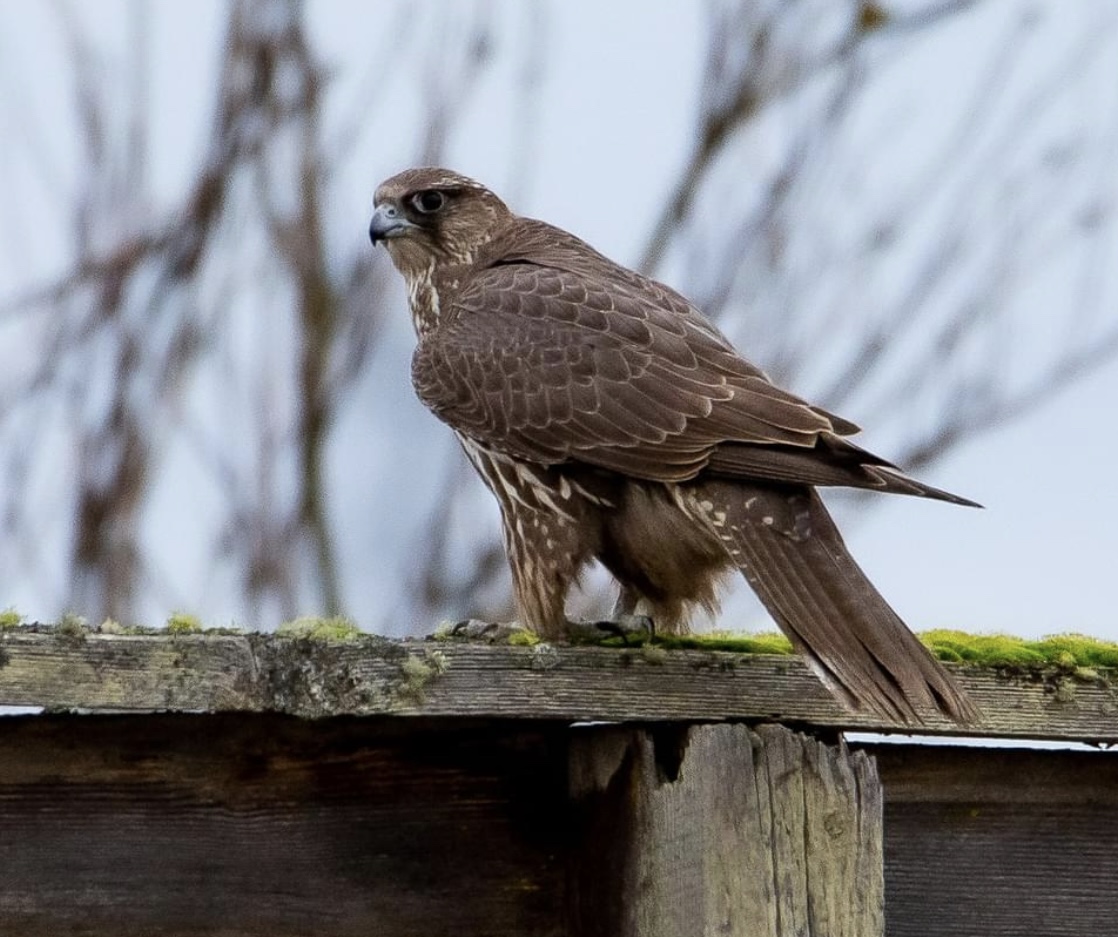
A wild female gyrfalcon perched on a wooden post in Washington State

A rare visitor to the lower 48, this wild female gyrfalcon will face significant threats to her safety while wintering in Washington State

Raptors face a convergence of threats that would be difficult to manage even in isolation. Together, they create a crisis that demands both wild habitat protection and the kind of captive genetic insurance that Falcons Forever is built to provide.

⚠ Highly Pathogenic Avian Influenza (HPAI H5N1)

The current global panzootic of HPAI H5N1 clade 2.3.4.4b represents an unprecedented threat to raptor populations. Unlike waterfowl, which can carry and shed the virus without showing symptoms, raptors experience severe illness and rapid mortality upon infection. The virus has been confirmed in 27 raptor species across 48 U.S. states. It survives freezing temperatures, spreads through contaminated feces and respiratory secretions, and continues to evolve. Apex predators, including falcons and eagles, are at elevated risk because they hunt weakened prey and may scavenge on infected birds. A captive population distributed across geographically separate facilities is the most direct insurance against a single outbreak eliminating a lineage entirely.

Iceland's wild gyrfalcon population, monitored continuously since 1981, illustrates how severe this threat already is: as of 2024 the population had fallen to its lowest recorded level, down 45% since 2019, with HPAI suspected as a driving factor since 2021. More recent reporting describes the population collapsing from roughly 2,000 to around 500 birds, according to the ornithologist who has tracked the population for over four decades.

Climate Change

Arctic and sub-Arctic species face the most acute climate pressure. The gyrfalcon, which depends on stable tundra prey populations and particular nesting cliff structures, is losing habitat to warming at rates that outpace natural adaptation. As prey species shift their ranges, falcon territories follow, often into conflict with human land use. Long-running field research from the Arctic Raptor Project in Nunavut, active since 1980, documents these pressures directly, including peer-reviewed findings on how disturbance and shifting conditions affect Arctic raptor reproductive success. For a more accessible overview of the project's history, see this profile from Nunatsiaq News.

Habitat Loss

For gyrfalcons, habitat loss is driven primarily by climate change rather than land development. As the Arctic warms, treeline advances northward into historic tundra, permafrost thaws and destabilizes traditional nesting cliffs, and the timing of prey availability shifts out of sync with breeding season. This is a climate problem playing out as a habitat problem, and it is accelerating faster than the species can adapt.

Poisoning

Lead fragments from hunting ammunition remain a primary cause of eagle and condor mortality, and rodenticides used in agriculture and residential pest control continue to accumulate in raptors through the food chain, killing birds that were never directly targeted. While poisoning is a serious threat to many raptor species, the same isolation that protects most gyrfalcons from direct human-caused casualty largely protects them from this concern as well.

Population Isolation

As wild populations shrink and fragment, the genetic diversity available within those populations declines. Small isolated groups are vulnerable to inbreeding depression, disease vulnerability, and local extinction events from which they cannot recover without external support.

Monitoring Gaps

The biology and conservation status of hundreds of raptor species remain poorly understood. Many have never been studied, much less counted. Without baseline data, population declines can go unrecognized until intervention options are severely limited.

Infrastructure Collision

Wind turbines, power lines, communication towers, and glass buildings kill significant numbers of raptors annually. These mortality sources add up across large populations and fall disproportionately on birds in peak breeding condition making long-distance flights.

Why captive reserves matter now more than ever

The Peregrine Fund proved that captive breeding can bridge a species through crisis and back to wild viability. Their methods, developed over more than five decades, demonstrated that a sufficiently diverse and carefully managed captive population can sustain a species through the kind of catastrophic decline that HPAI, climate events, or habitat loss could cause in a compressed timeframe.

Falcons Forever operates with this proof of concept as our foundation. We are not building a collection. We are building a bridge.

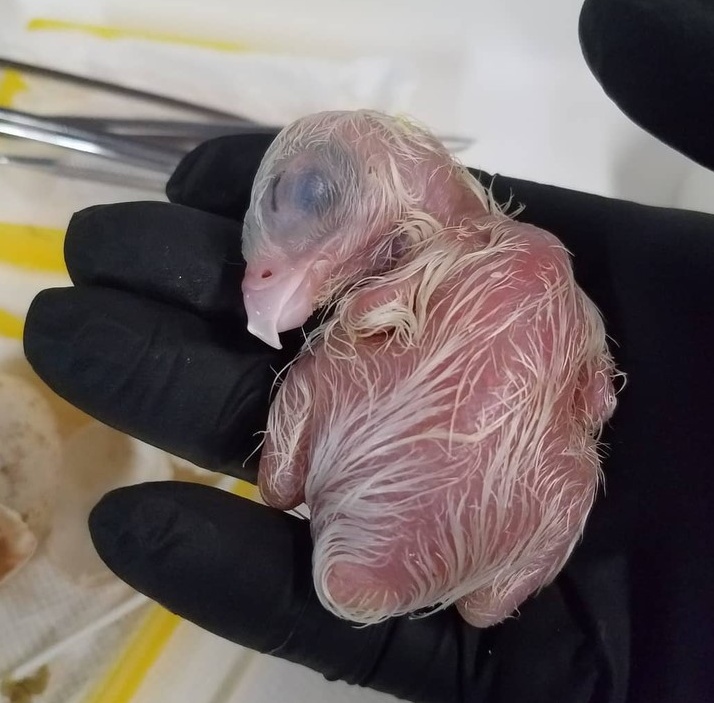
A newly hatched gyrfalcon eyas held in a gloved hand

Newly hatched gyrfalcon eyas

The species we work with

Falcons Forever works predominantly with gyrfalcons, though we work with a few other raptor species as well, including Siberian goshawks and ornate hawk eagles.

Gyrfalcon (Falco rusticolus) — The world's largest falcon and a bird of the high Arctic, the gyrfalcon is uniquely vulnerable to the compounding pressures of climate change, shifting prey populations, and HPAI. The captive population in North America is small enough that every successful breeding contributes meaningfully to the global gene pool. This is our longest-standing and most active breeding program.

Siberian Goshawk, Accipiter gentilis albidus — The largest and most striking of all goshawk subspecies, albidus is restricted in the wild to northeastern Siberia and Kamchatka, where its pale plumage, ranging from blue-grey to near-white on some individuals, is a direct adaptation to its snowy boreal landscape. It is significantly larger than the North American subspecies, with females recorded at nearly four pounds, and has been prized in falconry for centuries as a supremely capable forest hawk. Albidus is exceptionally rare in North American captive breeding programs, making our work with this subspecies one of the more distinctive contributions we make to the project genetic reserve. Northern Goshawk populations broadly have declined across portions of their range, driven by old-growth forest loss, West Nile Virus, and the recovery of mammalian nest predators, and the species lacks federal protection in the United States despite two listing attempts.

Ornate Hawk Eagle (Spizaetus ornatus) — A striking raptor of the tropical Americas, the Ornate Hawk Eagle carries Near Threatened status driven by ongoing deforestation across its range in the Amazon Basin and Atlantic Forest. It is one of the most visually dramatic birds of prey in the Western Hemisphere, and one of the least represented in North American captive breeding programs. Its inclusion in our project reflects both the conservation need and the important role that rare species play in connecting the public to conservation work.

We operate under a federal propagation license that authorizes the breeding, holding, and transfer of raptors in accordance with U.S. Fish and Wildlife Service regulations. We practice artificial insemination alongside natural pairing where appropriate in order to maximize our ability to maintain diversity within our project.

Where our birds go

Falcons Forever places chicks, which are more correctly called eyasses, through three primary channels, each chosen because it puts the bird into a relationship that serves both the individual animal and the broader conservation mission.

Traditional falconers provide the most intensive individual care available outside a dedicated breeding facility. The falconer-bird relationship, built over months of daily interaction, produces animals whose welfare is closely monitored and who may eventually contribute to the broader captive gene pool through future breeding programs.

Pest abatement operations at airports, farms, and other commercial sites give birds a working role in pest management, reducing the use of lethal alternatives while keeping a trained raptor in active condition under professional care.

Other breeding projects receive birds specifically to strengthen genetic lines that overlap poorly with their existing population. These placements are the most direct contribution to long-term species viability.

Process

From egg to placement

Pair selection

Breeding pairs are chosen based on lineage compatibility and genetic diversity goals, not performance metrics. We consult with cooperating facilities and maintain detailed records to ensure no pairing unnecessarily duplicates existing representation in the captive population.

Incubation

Eggs are monitored daily throughout the 35-day incubation period. Weight loss curves are tracked against ideal parameters and humidity is adjusted throughout to support optimal air cell development. Every clutch receives individualized attention.

Brooding and imprinting

Whether an eyas is destined for falconry, pest abatement, or a breeding program determines the imprinting protocol used from hatch. This decision is made before incubation and is built into the placement plan from the beginning.

Placement and documentation

Every bird placed is documented with full lineage, health records, and placement rationale. We maintain contact with placement recipients and track outcomes where possible to inform future decisions.

The value of a captive breeding program is not fully visible until it is needed. The skills, the records, the relationships between birds and the people who tend them, these things take years to build and cannot be improvised in a crisis. The time to build them is now, while wild populations still exist to inform what we are working to preserve.
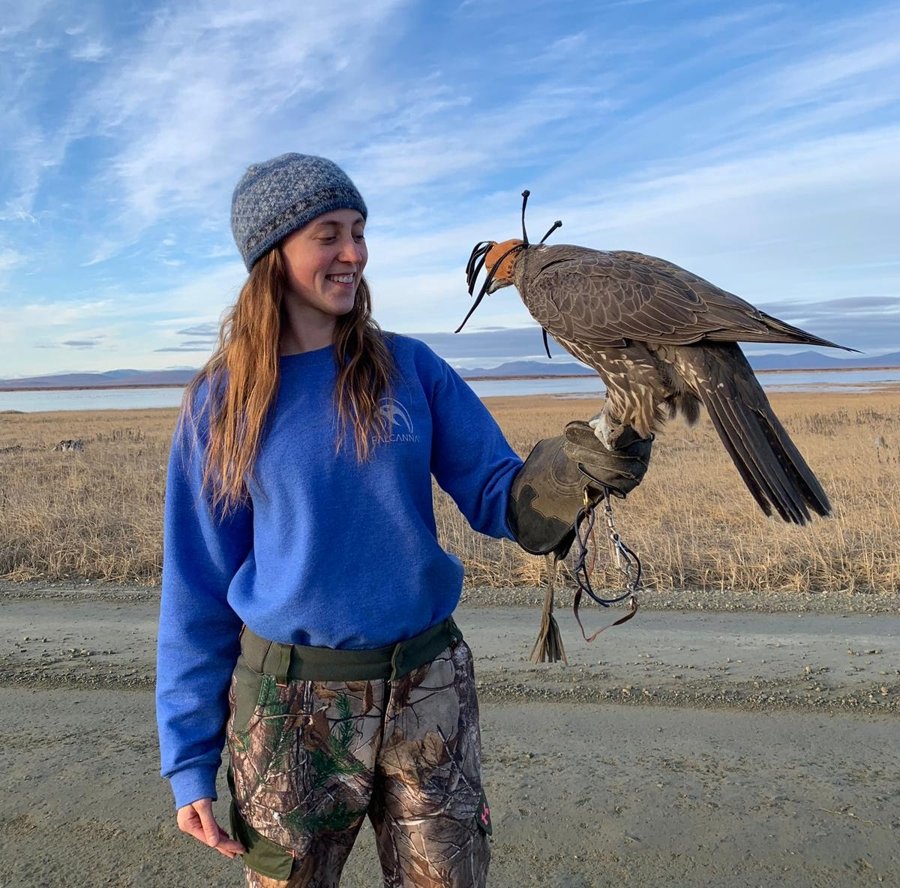
Bethany Rondeaux holding a falcon on her glove in the field

Founding Administrator

Bethany Rondeaux

Bethany is the administrator of Falcons Forever's federally licensed breeding project and the co-founder of Falcanna, the Clean Green Certified cannabis brand whose success made this conservation project possible. A falconer with years of hands-on raptor experience, she brings both the practical husbandry knowledge and the institutional discipline the program requires. Her dual role as a business founder and conservation practitioner reflects the model Falcons Forever is built on: private enterprise funding public ecological good.

Bethany's interest in raptors runs deeper than conservation policy. She and her husband Justin met through falconry, and the birds have been central to their life together on the Olympic Peninsula for years. Her approach to the breeding program is the same as her approach to everything else: obsessive attention to the details that matter, a willingness to learn from every bird, and no tolerance for cutting corners.

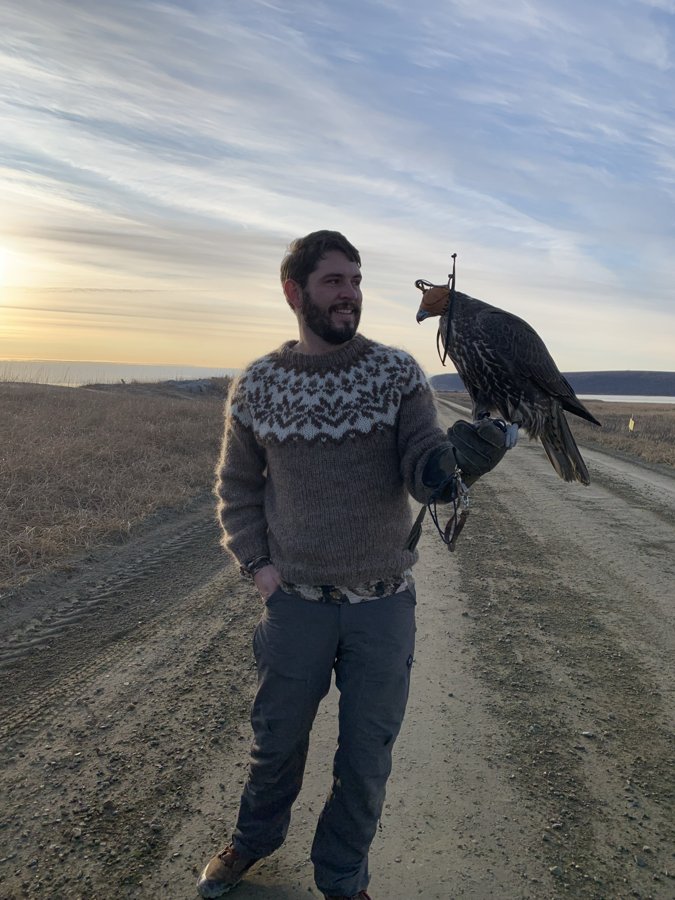
Justin Rondeaux holding a hooded gyrfalcon on his glove

Co-Founder & Breeding Operations

Justin Rondeaux

Justin is a fifth-generation resident of the Olympic Peninsula and a member of the Cow Creek Band of Umpqua Tribe. He came to falconry through the same path as Bethany, a shared passion that began long before they met, and he brings to the program a deep familiarity with the Pacific Northwest landscape and its ecology. Justin manages the physical care of the birds, the daily monitoring of breeding pairs, and the infrastructure of the facility.

His hands-on role in the breeding program includes egg monitoring, incubation management, chick brooding, and the assessment of individual bird health and behavior. The patience and attentiveness that falconry demands over years of working one-on-one with a bird translates directly to the kind of observation skills that make a breeding program succeed.

Advisory

Guided by the broader community

Falcons Forever draws on the expertise of the wider falconry and raptor conservation community, including cooperating breeders, veterinary specialists, and USFWS-permitted falconers whose collective experience with multiple species and breeding programs informs our decisions. We are actively building our formal advisory structure as the organization grows.

Spring 2026

Active hatching underway across multiple clutches

The 2026 breeding season is producing results across several active clutches. Egg weight monitoring has shown strong trajectories on A2, C2, and C1 pairs, with M1 and M2 eggs approaching hatch at day 32. Incubation has been carefully managed this season with humidity adjustments following daily weight tracking, and early indications are that the clutches are developing well. We will share outcomes when the hatch is complete.

Winter 2025

HPAI monitoring protocols updated for the 2026 season

In response to continued HPAI H5N1 spread across North America, with confirmed cases in raptors documented in 48 states, Falcons Forever has updated its biosecurity protocols for the 2026 breeding season. Measures include enhanced separation between facility sections, stricter quarantine procedures for any birds arriving from outside the facility, and daily health monitoring logs for all breeding birds. We are in communication with our veterinary team throughout the season.

Fall 2025

Falcons Forever receives 501(c)(3) determination

After completing the formal application process, Falcons Forever has received its federal tax-exempt determination as a 501(c)(3) public charity. This designation allows us to accept tax-deductible donations and pursue foundation funding, opening the path toward a more sustainable and collaborative conservation model. We are grateful to the legal and advisory support that made this possible and look forward to growing the organization's reach.

Summer 2025

First chicks from the 2025 season placed with cooperating programs

Several chicks from the 2025 breeding season were placed with cooperating breeders and licensed falconers through the summer. Placements were selected based on genetic compatibility and the capacity of recipients to provide appropriate long-term care. We maintain follow-up contact with all placement recipients and will track outcomes as the birds mature.

Spring 2025

Facility expansion adds additional flight chambers

The Falcons Forever facility on the Olympic Peninsula completed an expansion of its flight chamber capacity this spring, allowing for a modest increase in breeding pairs for the 2026 season. The expansion was funded by the Falcanna operating entity and reflects the ongoing commitment by the founding team to reinvest operational success into conservation infrastructure.

Falcons Forever was built from private founding resources, and we are proud of the independence that has given us. As the program grows, external support allows us to expand our reach, bring in additional expertise, fund genetic analysis, and contribute to the broader conservation community in ways that founding resources alone cannot sustain.

$50

Tiercel

Covers one week of supplemental feed for a breeding pair during incubation season.

$500

Eyrie

Supports genetic diversity analysis for one season's breeding decisions, ensuring our pairs contribute meaningfully to the project gene pool.

$1,000

Gyrfalcon

Underwrites the incubation and brooding of a single clutch from egg to placement-ready chick, including monitoring, feeding, and veterinary support.

$5,000

Legacy

Major gifts at this level support facility improvements, additional breeding chambers, or the establishment of new project relationships with other licensed programs.

Make a Gift

Contact us to give

Our online donation processing is being established. To make a gift now, please reach out directly through our contact page and we will provide instructions for check, wire transfer, or other giving methods. All gifts are tax-deductible as Falcons Forever is a federally recognized 501(c)(3) organization.

Other Ways to Help

Beyond financial support

Send a Message
Frequently Asked Questions

Is Falcons Forever open to the public?

The breeding facility is not open for general public visits, as the welfare of the birds requires a controlled and low-disturbance environment during breeding season. Education and outreach activities are planned as the program matures.

Can I adopt or purchase a falcon from Falcons Forever?

Placements are made through the project network to licensed falconers, permitted pest abatement operators, and other breeding programs, and are governed by federal and state regulations regarding the transfer of raptors. Contact us if you would like to be considered.

Are donations tax-deductible?

Yes. Falcons Forever is a 501(c)(3) nonprofit organization. All contributions are tax-deductible to the extent permitted by law. You will receive a receipt for your records.

How do I become a licensed falconer?

Falconry licensing is administered by U.S. Fish and Wildlife Service and individual state wildlife agencies. We recommend contacting the North American Falconers Association or your state falconry club for guidance on the apprenticeship and licensing process.

How does Falcons Forever relate to the Falcanna brand?

Falcons Forever is an independent 501(c)(3) nonprofit. Its founding administrator, Bethany Rondeaux, also co-operates Falcanna, a licensed cannabis producer on the Olympic Peninsula. The success of that enterprise provided the seed funding for Falcons Forever's facility and early operations. The two entities are legally separate.